


Re-understanding world through classics
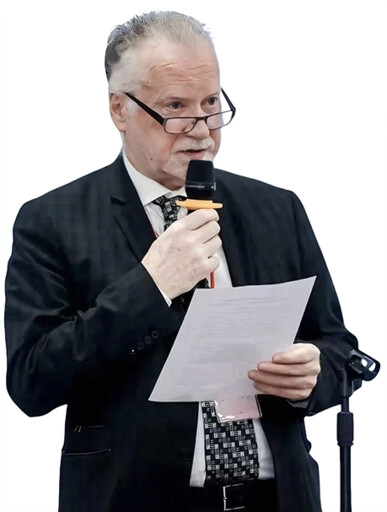
Rémi Mathieu Photo: PROVIDED TO CSST
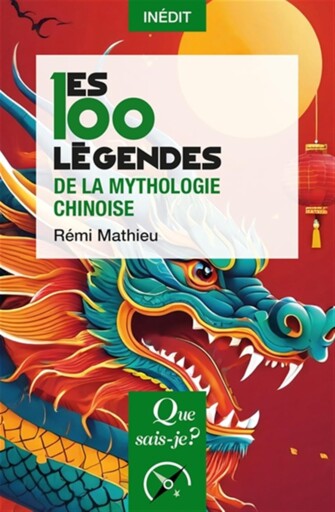
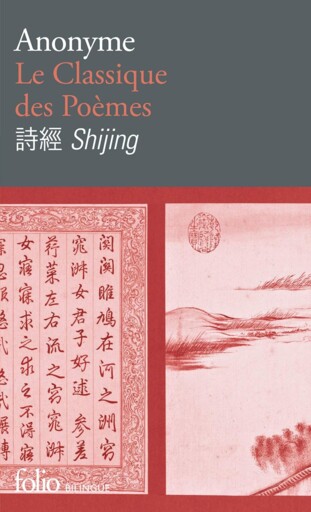
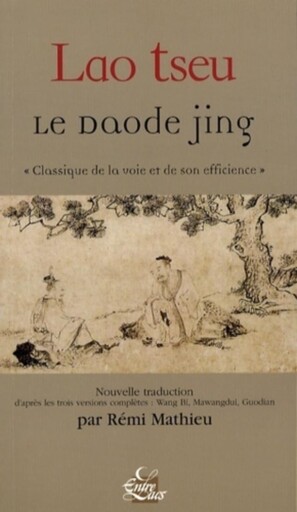
FILE PHOTOS: Rémi Mathieu’s French translation of some Chinese classical works
Rémi Mathieu, a French Sinologist, honorary research fellow at the National Center for Scientific Research in France, and recipient of the 2017 Special Book Award of China, has devoted his career to the translation and study of the Chinese classics. His scholarly interests range widely across ancient Chinese thought and literature, from The Analects, Mencius, and Xunzi to the Tao Te Ching, and from the Classic of Mountains and Seas and In Search of the Supernatural to the Guodian bamboo manuscripts.
Recently, as an invited guest at the Second World Conference of Classics, Mathieu sat down with CSST to discuss his distinctive perspective on the Chinese classics. In his view, these texts offer a unique way of seeing and understanding the world—a perspective shaped in part by classics whose origins stretch back more than three millennia. At the same time, he cautions that the classics alone cannot fully explain China. The flourishing of the “Hundred Schools of Thought” during the pre-Qin era (prior to 221 BCE), together with successive layers of influence from other civilizations, also helped shape the “real China” we encounter today.
At a time of growing global uncertainty and mounting challenges for the humanities, Mathieu, now in his 70s, revisits the enduring significance of the Chinese classics through the eyes of an outsider. In doing so, he offers a cross-cultural reflection on the meaning and relevance of classical studies in the contemporary world.
Why Chinese classics matter
CSST: You have devoted more than 50 years to the study of the Chinese classics. In your view, why should we read these texts? Can they help us gain a deeper understanding of China?
Mathieu: What the Chinese classics teach us is that, for more than three millennia, there has existed another way of seeing, understanding, and experiencing the world in which we live. The wisdom and intelligence of China are concentrated in these great texts. That alone is enough to merit our attention.
Certainly, the genius of China is not confined to the classics. The sciences, for instance, are almost entirely absent from them, but studying these texts allows us to grasp the intellectual and spiritual frameworks that enabled the Chinese people to inhabit their land, transform it, and understand how it was ordered according to a single principle that is at once both a structure and a moral ideal: the Dao (Way).
For all Sinologists, progress in understanding this literature brings a daily sense of wonder that nothing can exhaust—much like the Dao itself. Yet knowledge of China cannot be reduced to knowledge of its classics alone. We must remember that pre-Qin China was the China of the “Hundred Schools of Thought,” and was in this respect quite comparable to ancient Greece, where thinkers from different schools engaged one another through books and dialogue.
In short, the classics constitute the heart of Chinese thought, but the heart is not the only organ that deserves our attention when seeking to understand Chinese culture.
CSST: Has your long engagement with Chinese civilization also changed the way you understand Europe and the Western classical tradition?
Mathieu: Any knowledge of others ultimately leads us to reflect upon ourselves and the knowledge we have of ourselves. This is the great value of Sinology, which is a form of knowledge of the other through the Chinese language.
All peoples are, by nature, ethnocentric; they tend to see themselves as the only truly human beings in the world. Naturally, therefore, the knowledge I have sought to acquire about China has transformed my own personal ethnocentrism. As a European, I regard both traditions as indispensable—equally relevant, yet equally incomplete, insofar as each needs to be confronted with other ways of mentally constructing the world, and sometimes with ways that involve the intervention of gods.
It is striking to observe that the Chinese world is possible without belief in a single god, a belief that has largely shaped the distinctiveness of the West, even if Islam is included within that broader tradition. I believe that, apart from language and writing—which are highly distinctive features of China—the religious question is what has most profoundly distinguished the West from China, and continues to do so even today.
Christianity has genuinely imposed a meaning upon the world: God possesses a will and a moral law. Chinese religion, by contrast, dispenses with this presumed meaning of the world and with the design of an all-powerful and all-knowing God. In this sense, China largely escaped dogma—if one sets aside the later organized forms of Taoist and Buddhist religions.
Necessity to broaden view of classical studies
CSST: In Western academia, the field of classical studies has traditionally focused on ancient Greece and Rome. In recent years, however, there has been growing scholarly interest in rethinking “classics” within a broader, more comparative framework that takes other ancient civilizations, including China, seriously. How do you understand this broadening of the field?
Mathieu: This shift that you describe is both a good thing and a bad thing. As we have said, it is beneficial to engage with other modes of thought that have existed throughout the world.
As for myself, I studied the classical tradition while I was in secondary school, but it was especially after graduation that I enthusiastically immersed myself in the great Greek and Latin authors. Herodotus, Thucydides, Homer, Hesiod, Aeschylus, Euripides, and, of course, Plato, Aristotle, the many Greek poets, and certainly Livy, Sallust, Tacitus, Caesar, and others have fascinated me profoundly and continue to challenge and inspire me today. Indeed, I am currently reading Cicero’s philosophical works. Their genius is all the more remarkable because traces of it remain visible in the great works of European literature, particularly French literature.
Yet I firmly believe that these major works must always be studied within their cultural, historical, and linguistic contexts. What I fear most is an overly superficial form of comparative study, which can do more harm than one might think when it focuses only on the apparent similarities between narratives. In doing so, one neglects the cultural environment—and especially the religious context—of the beliefs or behaviors being examined. It then becomes tempting to “compare” them without first asking what they actually meant within the societies in which they appeared.
I am pleased to note that, in recent years, certain works of Chinese thought have been included in the French baccalauréat curriculum.
CSST: Recent developments in higher education—including institutional restructuring and reduced support for humanities programs—have intensified ongoing discussions about the future of the humanities. In this context, do you believe the study of classical civilizations still holds relevance and vitality in today’s world?
Mathieu: It is often said that we must know where we come from in order to know where we are going. That is, of course, entirely true. What are called the “humanities” are unquestionably indispensable to the formation of the mind.
However, it must be acknowledged that contemporary education places far less emphasis on this vast field of knowledge than was the case in my youth. That is simply a fact. When I discuss these matters with my grandchildren, I sometimes feel as though I am describing a vanished world that no longer belongs to their intellectual horizon. Yet other worlds, which were unknown to me, are opening up before them—and that is all to the good.
It is clear that the place of the humanities is steadily shrinking in today’s school curricula and that they are increasingly becoming the exclusive domain of specialists and researchers. Students no longer compose Latin prose, as we did in my day; instead, they study computer science and artificial intelligence. Perhaps we have lost something in this relentless pursuit of knowledge—something that once helped make us responsible human beings.
Strategy of ‘compromise’ to translation of different texts
CSST: You have translated an extraordinarily wide range of Chinese classical works—from mythology and philosophy to poetry and historical texts. In translating The Book of Songs, you said that you sometimes drew inspiration from the language of Victor Hugo in order to preserve a certain classical poetic atmosphere for French readers. Do different genres require fundamentally different translation approaches? How would you describe your translation philosophy?
Mathieu: Such a vast question would require an entire volume of reflections, nuances, and examples. Let us be brief. Translating a Chinese text into French—whether it be a work of history, philosophy, or poetry—obviously requires different approaches.
Philosophical works demand a high degree of technical precision, since their authors generally seek to express ideas with exactness—although this is not always the case in Chinese philosophy. The translator must therefore find French terms that come as close as possible to the original Chinese text. Yet many concepts specific to Chinese thought have no true equivalent in the language of European philosophy—for example, ren (benevolence), Dao, and yi (righteousness). Their semantic fields are simply not comparable.
Poetry presents an entirely different challenge. One must find a balance between meaning, sound, and rhythm, not to mention the associations and connotations that a particular word may evoke. The task is therefore far more complex. I am particularly fond of the word “compromise,” because it captures the reality that no translation strategy can consistently achieve a perfect harmony of meaning, sound, and rhythm.
A translator into French must be a native speaker of French, because only such a person truly understands the associations that particular images or terms evoke in the mind of the reader. Readers will naturally and often unconsciously connect words to elements of their own cultural background. The great classical authors of French literature can be of great assistance in this regard—Racine, Hugo, Baudelaire, and others—to whom I often turn for inspiration.
Editor:Yu Hui
Copyright©2023 CSSN All Rights Reserved