


‘Classical tradition remains immense reservoir of intellectual, ethical resources’
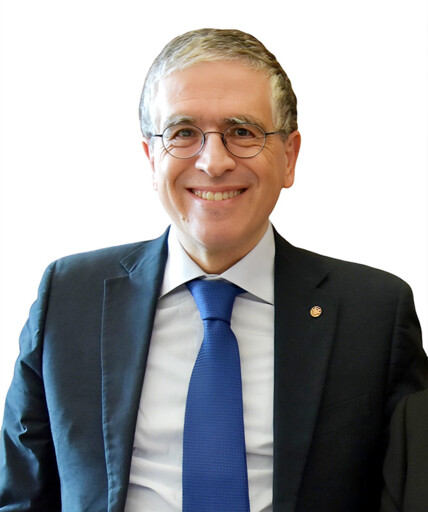
Giorgio Piras Photo: PROVIDED TO CSST
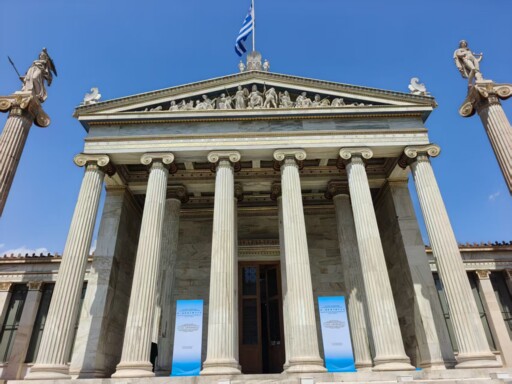
The second World Conference of Classics was held on June 9 and 10 at the Academy of Athens in Greece, under the theme “Dialogue between Ancient and Modern: Contemporary Inspirations from Classical Wisdom.” Photo: Fang Ke/CSST
On June 9–10, the Second World Conference of Classics was held in Athens, Greece, once again bringing the contemporary relevance of classical studies into focus. Far from being confined to the reconstruction and verification of a distant past, classics—a field devoted to the study of ancient civilizations—preserves reflections on order, human nature, virtue, and reason that form part of humanity’s shared spiritual heritage. Their enduring insights continue to provide a foundation for individual life and a source of wisdom for genuine civilizational dialogue.
To explore the role and mission of classical studies in today’s world—and, in particular, how classical wisdom might be revitalized amid profound changes unseen in a century—CSST recently interviewed Giorgio Piras, a professor of classical philology in the Department of Ancient Sciences at Sapienza University of Rome.
In the interview, Piras explained how the classical tradition can serve as an intellectual sanctuary in turbulent times, discussed the dual impact of artificial intelligence (AI) on the transmission of the humanities, and reflected on the prospects for dialogue between Eastern and Western classical civilizations. For Piras, amid profound shifts in the global order, rapid technological disruption, and intensifying conflict and division, the discipline, moderation, compassion, and humanity championed by classical thought offer precisely the kind of intellectual resources needed to understand the present and build a more peaceful world.
Drawing nourishment from ancient literature, thought
CSST: In your view, given the conflicts and turbulence we face today, how can classical studies serve as an academic resource for bridging contemporary civilizational divides? Have you observed any cases in which classical scholarship has successfully engaged with real-world issues?
Piras: In this period of profound transformation and disruption of the world order, I believe that classical studies can provide a meaningful contribution to culture and thought in helping to bring peoples closer together and to foster the resolution of conflicts. Indeed, throughout history, the classics have often been revisited in times of crisis, serving as an intellectual refuge for reflection on the world and on ourselves as human beings. This dimension, which is so deeply embedded in classical literature and thought, can help restore the proper values and perspective through which to interpret contemporary events. Only a long-term historical vision, in fact, can provide the necessary balance and wisdom for building peaceful relations among peoples and nations.
It is true that, at certain moments in history, the legacy of the classical world has been distorted and appropriated. More often, however, the reflections of ancient philosophers and intellectuals are invoked because they encourage respect for humanity and the reconciliation of conflicts. The classical world offers numerous emblematic examples in this regard, and it is significant that ancient cultures themselves, which constantly drew inspiration from exemplary figures and events of the past, have in turn provided modern societies with enduring models of conduct and reflection.
The ancient world celebrated not only heroic and martial virtues, but also discipline, moderation, compassion, and humanity. Even among the great leaders of antiquity, those qualities were often regarded as marks of true greatness, while less merciful figures frequently became examples of conduct not to be imitated. The classical tradition therefore remains an immense reservoir of intellectual and ethical resources from which we may continue to draw, fully aware of its exemplary value for global culture and for contemporary society.
CSST: From a cross-cultural comparative perspective, what unique answers do the ancient civilizations offer to shared human concerns such as justice, happiness, virtue, and order?
Piras: These fundamental human concepts are central to ancient Western thought. I would speak of Greco-Roman civilization, because ideas originating in Greece profoundly influenced Roman culture, while Rome itself later developed these concepts further, both in literature and in philosophy. I think, for example, of intellectuals such as Lucius Annaeus Seneca, who also developed profound philosophical reflections on these themes. However, such issues had already constituted central philosophical topics for centuries, first in Greece and later in early Rome.
These ideas were considered essential for human beings, constitutive of human nature itself, and goals to be pursued and preferred, for example, over power as such and over material wealth. The idea of order is mostly connected to perfection, to the fulfilment of human action and human thought, and to the concept of logos. Without order, it is not possible to think, to build a civilization, or even to act in an acceptable way throughout one’s own existence.
Ancient thinkers and philosophers consistently attempted to envision an ordered human society as an ideal society in which the human values of virtue and happiness could be fully realized. This ideal society was later represented in the arts during the European Renaissance, often in highly significant and symbolic visual forms. Great artists found inspiration not only in ancient works of art themselves, but very often in the literature and thought of antiquity that had been preserved and transmitted across the centuries.
These values represent a common heritage for all humanity, and I recognize that they were also developed with great depth by classical Chinese thinkers. Dialogue between classical traditions that may appear distant from one another allows us to identify values and reflections shared across the traditions of different peoples, while also generating new perspectives that can contribute to the cultural and human development of nations with such ancient traditions, and may also provide a model for other peoples.
AI brings classics out of ‘ivory tower’
CSST: The Second World Conference of Classics included a parallel forum on technology and civilization. How would you assess the profound impact of digital humanities and AI on the research methods of classical studies?
Piras: The extraordinary and rapid development of digital communication and AI represents a turning point in the history of humanity. We are truly living through a real revolution in the ways we communicate and perhaps even in the ways we think. Certainly, this incredible and extremely rapid technological evolution will have a decisive impact on future generations.
The concern I see in this process does not relate so much to the research methods and approaches of classical studies, but rather to the possibility of keeping alive and accessible the literary and intellectual tradition that has until now largely been expressed through the printed book. The classical tradition itself has already experienced important moments of technological transformation in its history. I am thinking particularly of the transition from the handwritten manuscript to the printed book. Although profoundly influenced by this change, the classical tradition nevertheless managed to remain alive, influential, and exemplary in the centuries that followed.
Today, however, the danger is that this revolution may be so rapid and so profound that it could affect and potentially endanger the entire heritage of the past. This is a process that must be guided by the wisest and most responsible individuals. From this perspective, those who work with and understand the classical tradition can provide important contributions in terms of cultural support and guidance for those who will make future decisions.
Classical studies themselves will probably not be fundamentally altered by new technologies, except in the sense that these technologies represent particularly powerful cognitive tools. They must therefore be understood, mastered, and used with attention and awareness, recognizing that the choices we make during this phase will determine what aspects of the extraordinary heritage of the past we will be able to transmit and make known to future generations.
CSST: As both a classical scholar and an educator, how do you think classical studies can step out of the ivory tower and become more fully integrated into social and cultural life, so as to nourish the spiritual world of more people?
Piras: This is a very important issue for scholars of classical studies. The study of the classical world is highly demanding and specialized, requiring a range of advanced skills as well as considerable preparation and dedication. In some respects, it is true that classicists often feel comfortable within their own “ivory tower,” aware that they are, in a sense, almost guardians or custodians of the distinguished classical tradition to which they devote themselves completely.
To a certain extent, such a position deserves respect. However, there is also the risk that it may ultimately condemn the ancient heritage we value so deeply to oblivion. Moreover, precisely because of our love for the classics, we cannot help but hope and work toward making them increasingly a heritage shared by all. Because of the importance of classical values for human development, it is essential that they be made accessible to everyone.
In this respect, AI can become a very useful tool, not merely a threat, as we mentioned earlier. It is therefore important that awareness of the significance of classical studies become increasingly widespread at the level of public opinion and society as a whole. It would also be important for countries with important and significant cultural traditions to engage in dialogue between their own heritage and the Western classical tradition.
I know that China has already made important progress in this direction, and I believe that an increasing exchange between different classical traditions could greatly contribute to further cultural growth. Many classicists are already aware of the importance of this process and are willing to place their knowledge at the service of society, stepping outside their comfortable boundaries and engaging more directly with the wider world.
Increasing opportunities for China-Europe academic dialogue
CSST: In 2024, China established the Chinese School of Classical Studies at Athens (CSCSA), its first overseas institute devoted to classical studies. What significance do you think this holds for classical scholarship and international academic collaboration?
Piras: I had the opportunity to participate in a workshop at the CSCSA already last year, and I look with sincere admiration upon this far-sighted decision, which in some ways recalls initiatives undertaken by European countries many decades ago. In Rome, for example, there are many foreign institutes that play an important role in stimulating research and fostering cultural exchange. They have long traditions, rich libraries, and regularly host meetings and conferences. Therefore, first of all, I would like to express my sincere congratulations on this decision.
I believe that having a centre in Europe, and specifically in a country so important for the Western classical tradition, is particularly significant. It will undoubtedly increase opportunities for close dialogue with European scholarship and, at the same time, allow Western scholars to look with increasing attention toward Chinese traditions, which are themselves attracting growing interest.
I believe that much can be learned from the reciprocal exchange between the classical traditions of different countries. I see many points of contact, perhaps even more than the more obvious differences that initially appear. These common elements, especially in terms of methodology and the profound attention devoted to texts, should in my view be explored more deeply in the future.
Editor:Yu Hui
Copyright©2023 CSSN All Rights Reserved