


An archaeological perspective on the dietary cultural heritage of the Central Plains
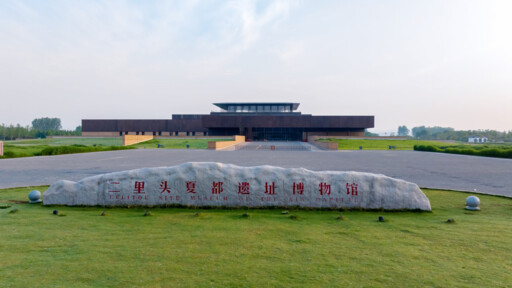
Erlitou Site Museum of the Xia Capital in Henan Province, China Photo: TUCHONG
As a core cradle of Chinese civilization, the Central Plains preserves a rich dietary heritage that embodies the survival wisdom and cultural memory of ancient communities. From an archaeological perspective, scientific analysis of food remains, traces left by culinary implements, and subsistence patterns not only supports national and local cultural heritage preservation efforts, but also helps clarify the origins and development of Chinese culinary civilization.
Core connotations
To begin with, it is necessary to understand the core connotations of Central Plains dietary heritage from an archaeological perspective.
The material carriers and intellectual essence of this heritage can be gradually reconstructed through archaeological discoveries. These remains include food traces directly linked to ancient diets, cooking utensils that embody culinary techniques, and archaeological features that reflect dietary institutions and practices. Together, they form an integrated cultural system encompassing material resources, technology, and social institutions.
Archaeological discoveries of food remains have outlined the material foundations of dietary practices in the Central Plains. Archaeobotanical evidence indicates that the cultivation of foxtail millet (Setaria italica) and broomcorn millet (Panicum miliaceum) in North China can be traced back to around 10,000 years ago. At sites such as Dadiwan in Gansu Province and Cishan in Hebei Province, dating to roughly 7,000–8,000 years ago, these grains had already become important food sources for local communities. At early Yangshao sites, including Xiaowu and Xishan in Henan Province, millet-based foods occupied a dominant place in the diet, marking the emergence of millet-farming societies. During the late Longshan period and the Erlitou culture, wheat, barley, cattle, and sheep introduced from West Asia were gradually incorporated into local food systems. Pig and sheep bones, along with plum and apricot pits unearthed from sites such as the Shang City in Zhengzhou and Yinxu in Anyang, both in Henan Province, show that a dietary structure centered on cereals and supplemented by meat and fruit had already begun to take shape. From the Eastern Zhou Dynasty (770–256 BCE) through the Han Dynasty (202 BCE–220 CE), wheat accounted for an increasingly significant share of staple foods. Isotopic analyses of human remains from Han-period sites such as Xuecun in Xingyang, Henan, also point to a marked increase in meat consumption, contributing to a more diversified dietary pattern.
Cooking utensils and related archaeological features reveal the evolution of culinary technologies. The pottery zeng—a cooking vessel with circular perforations at the base—from the Yangshao culture and the pottery li—a wide-mouthed tripod cooking vessel—from the Longshan culture correspond respectively to food preparation by steaming and boiling. Together, they established a Central Plains culinary tradition in which steaming and boiling served as the primary techniques. Bronze ritual vessels such as yan, an ancient Chinese bronze steamer, and ding, a tripod cauldron, unearthed at Yinxu not only continued these culinary practices but also endowed food-related activities with hierarchical and ritual significance.
Archaeological evidence of food-related institutions and practices reveals the deeper cultural and intellectual values embedded in Central Plains dietary traditions. At sites such as the Zhengzhou Shang City and Erlitou in Yanshi, the spatial arrangement of kitchen remains and sacrificial pits indicates that food-related activities already served both subsistence and ritual functions, echoing the early idea that food is the paramount necessity of the people. These discoveries substantiate archaeologist Wang Renxiang’s observation that “food is both science and art,” highlighting the rich cultural meanings of Central Plains dietary traditions beyond their material dimensions.
Technological innovation
Beyond defining the core connotations of Central Plains dietary heritage, archaeological research also reveals its value through technical methods and paradigm innovation.
Advances in modern archaeological techniques have provided important methodological support for the study of dietary heritage. As research has moved from traditional stratigraphic excavation toward the integration of scientific technologies, the field has shifted from the description of artifacts to the decoding of cultural practices and meanings.
Systematic field excavations have supplied essential materials for building a foundational database of Central Plains food culture. Through specialized techniques such as flotation and water-screening, archaeologists have recovered large quantities of plant seed remains from sites including Wadian and Meishan in Henan, enabling precise reconstructions of changing crop assemblages across different periods. Zooarchaeological research, based on the identification and measurement of animal bones, has clarified the domestication sequence of animals in the Central Plains. Stratified excavations of burials and habitation remains at sites such as the Zheng-Han Ancient City in Xinzheng, Henan, have further revealed dietary differences between urban and rural populations, as well as between elites and commoners, providing dietary evidence for the study of social structures.
The precise analytical methods of archaeological science have enabled detailed reconstructions of dietary heritage. Stable isotope analysis, grounded in the principle that “you are what you eat,” reconstructs ancient diets through carbon and nitrogen isotope ratios. Carbon isotopes distinguish the relative contributions of C4 crops, such as foxtail and broomcorn millet, from C3 crops, including rice and wheat, while nitrogen isotopes reflect levels of animal-protein consumption. Studies using this technique on human remains from sites such as Zhouyuan in Baoji, Shaanxi Province, and Yinxu demonstrate that millet remained the dominant staple food through the Shang and Zhou periods, while wheat consumption was still relatively limited. These findings have corrected earlier misconceptions about the pace at which wheat was adopted in ancient China. Molecular biological approaches have further overcome preservation constraints. Ancient DNA analyses have clarified the genetic lineages of crops cultivated in the Central Plains, providing direct evidence for research on crop domestication and dispersal.
Interdisciplinary integration within archaeological science has made it possible to develop a fuller understanding of dietary heritage. In Reading History with Chopsticks: Dietary Practices in Central Plains from the Eastern Zhou to the Han Dynasty, archaeologist Zhou Ligang systematically examined the evolution of dietary practices during this period, demonstrating the value of combining archaeological science with historical research. Collaboration between archaeology and gastronomy has also enabled ancient foodways to be recreated in more vivid form.
Contemporary value and practical pathways
The contemporary significance of archaeological research on Central Plains dietary heritage lies in how these discoveries can be preserved, interpreted, and brought into public life.
The value of archaeological research on Central Plains food culture has moved beyond academia, becoming an important foundation for cultural inheritance, the integration of culture and tourism, and the dissemination of Chinese civilization. Revitalizing cultural heritage through archaeological discoveries requires adherence to the principles of “protection first and inheritance as a priority,” thereby achieving an effective transition from archaeological interpretation to contemporary application.
Archaeological discoveries provide essential resources for the development of cultural intellectual property. Drawing on its rich archaeological and intangible cultural heritage, as well as its reputation as the “Hometown of Chinese Chefs,” Changyuan in Henan has established the Cuisine Culture Museum of China. By incorporating elements of intangible food heritage into a Song-style cultural setting, the museum has become a model for revitalizing heritage through the integration of gastronomy and intangible cultural traditions. Archaeologically verified cultural elements—including the millet-farming traditions of the Yangshao culture, the bronze ritual dining practices of the Shang Dynasty, and the rise of wheat cultivation during the Han Dynasty—can be further integrated with major regional cultural brands. Such integration could inspire themed cultural products and initiatives such as “The Fragrance of Yangshao Millet” and “Ritual Dining at Yinxu.”
The achievements of archaeological science also contribute significantly to heritage preservation and public engagement. Building on these advances, a comprehensive archaeological database of Central Plains dietary heritage could be established by integrating information on plant remains, animal bones, culinary utensils, and stable isotope datasets, thereby providing a scientific basis for heritage conservation. Drawing on these integrated datasets, digital technologies could be used to reconstruct the manufacturing processes of bronze food vessels from Yinxu and the culinary scenes of the Yangshao period.
An archaeological examination of Central Plains dietary heritage is not only a retrospective exploration of the wisdom embedded in the lives of ancient peoples, but also a fulfillment of contemporary responsibilities for cultural transmission. From the millet grains of the Yangshao culture to the bronze dining vessels of the Shang and Zhou periods, from dietary differences revealed through stable isotope analysis to culinary techniques reconstructed through interdisciplinary research, archaeological discoveries have progressively decoded the cultural essence of Central Plains food traditions—one characterized by grain-based subsistence, the primacy of steaming and boiling, and the integration of food with etiquette practice. Promoting the organic integration of archaeological findings with the preservation of intangible cultural heritage and the development of cultural and creative industries can bring these long-buried culinary traditions back to life. Such efforts not only provide empirical support for research into the origins of Chinese civilization, but also infuse contemporary cultural development with intellectual resources rooted in history.
Sun Lingxia is a professor from the College of Food Science and Technology at Henan Agricultural University; Wei Tao is a professor from the School of Archaeology and Cultural Heritage at Zhengzhou University.
Editor:Yu Hui
Copyright©2023 CSSN All Rights Reserved