


A plank on the long bridge of China-US friendship
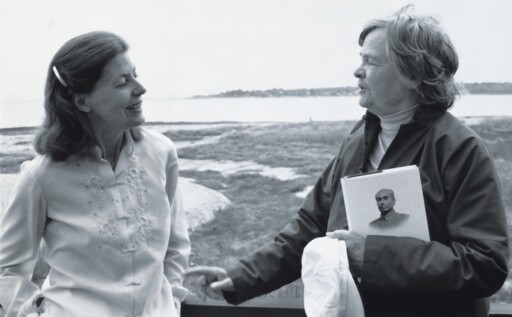
Sharon Crain with Helen Foster Snow (right) in Madison, Connecticut, the United States, 1983 Photo: PROVIDED TO CSST
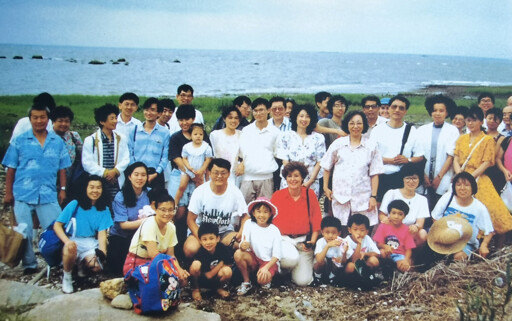
The first group of Chinese scholars to visit the United States after the normalization of Sino-US relations, gathered outside Sharon Crain’s home in Madison, Connecticut, in 1980 Photo: PROVIDED TO CSST
For nearly half a century, Sharon Crain has crossed the Pacific as a participant in—and chronicler of—China-US people-to-people exchange. First drawn to China in the 1970s and later inspired and guided by Helen Foster Snow, she has fostered ties through education, sister-city partnerships, rural education initiatives, and documentary photography. A graduate of Duke University in Chinese studies, Crain is now a visiting professor at Shaanxi Normal University, an overseas council member of the Edgar and Helen Snow Studies Center in China, and senior advisor to the US-based Helen Foster Snow Foundation.
Her work has taken many forms. As director of the Scholars Program at the China Institute in New York, she helped bring the first group of Chinese scholars to the United States after the establishment of diplomatic relations in 1979. She promoted the sister-city relationship between Kansas City, Missouri, and Xi’an, Shaanxi, and brought peasant-paintings from Huxian County in Shaanxi to American audiences. At Shaanxi Normal University, she taught and mentored students, while her book Witness to Change: After Mao to Now vividly shows part of the great changes that have taken place since China adopted the policy of opening up and reform nearly five decades ago. She has received the Sanqin Friendship Award from the Shaanxi provincial government and been named an Honorary Peasant of Huxian and an Honorary Villager of Anshang Village in Huxian. Together, these honors reflect the enduring ties she has forged with the Chinese people.
After several years away, Crain recently returned to China with her family. During her visit, CSST spoke with her about nearly five decades of experiences, encounters, and reflections spanning both sides of the Pacific.
Carrying forward Helen Snow’s spirit
CSST: Nearly half a century has passed since you first set foot in China. What has been the driving force that has sustained your commitment over all these years and inspired you to devote so much time and energy to building people-to-people ties between China and the United States?
Crain: I had the opportunity to major in Chinese studies at Duke University in the 1960s, at a time when the US and China knew very little about each other. We had no formal diplomatic relations then, and I was curious to learn more about China. When President Nixon made his historic visit to Beijing in 1972, the doors between our countries began to open. My husband, Bill Crain, invited some of the first Chinese business delegations to visit his company in the United States, and he was subsequently invited as one of the first Americans to attend the Guangzhou Trade Fair in 1975. I was eager to go to China with him in 1977 and learn more about the country firsthand by meeting its people.
In 1979, when Deng Xiaoping made his historic visit to Washington, DC, Helen Foster Snow was invited to attend, wearing a red Chinese jacket. It was that year that I first met Helen, who was living in Madison, Connecticut, very near where I lived.
We became close friends for the last 20 years of her life. She became my mentor and teacher and opened doors for me to go deeper into understanding China. She challenged me and [Chinese scholar] An Wei to carry on her life-time work of promoting friendship between the Chinese and American people. It became my passion, for almost 50 years, as I continued to teach and learn in China.
CSST: Helen Snow and Mr. An Wei profoundly shaped the lens through which you see China. In the context of China–US people-to-people exchange today, how should we carry forward the spirit of Helen Snow’s generation?
Crain: Helen Snow was a bridge builder who paved the way for all of us to follow. Helen was a genius and had an incredible capacity for learning. She went to China on a steamer across the ocean as a 21-year-old girl and bravely made her way through war-torn China to Yen’an [in Shaanxi] in 1937 to personally interview Mao [Zedong], Zhou Enlai, Zhu De, and others who would become the future leaders of China. Helen also learned from the women, the young people, and the common people and documented their stories to provide a deeper understanding of China. She truly listened and learned from the people. She is the role model for all of us to do the same.
Forging lasting bonds among the people
CSST: After the establishment of diplomatic relations between China and the US, you spearheaded the Scholars Program at the China Institute, welcoming the first group of Chinese visiting scholars to America. What unique role can two-way youth exchange play in connecting the people of our two countries?
Crain: The China Institute is the oldest continuous organization in America dedicated to promoting greater understanding of China by bridging cultures through programs in art, business, culture, and education. I was fortunate to serve on its Board of Trustees for over 20 years and became chairman of the Scholars Program for the first young people who came from China after the establishment of diplomatic relations.
It was a way for the Chinese scholars to learn about America by getting to know the American people and to share with them about life in China and Chinese culture. Each summer a group would come to our house in Madison CT, which is one of the oldest towns in America. We visited historic museums, went swimming and boating, and ate jiaozi or hamburgers together. Both sides made good friends and lasting memories.
CSST: Back in the day, you brought Huxian peasant paintings to the US and launched education aid projects in rural China. Why do you believe rural folk culture can serve as such an important vehicle for advancing people-to-people friendship between China and the US?
Crain: My father grew up on a small farm in rural America. My grandmother rolled noodles on her wooden dining room table that were just as delicious as those in Shaanxi Province. I grew up with a deep respect for farmers in America and peasants in China. Both are hard-working people who would always welcome you and share their food, even if they only had a small amount.
In 1989, I was in China with the mayor of Kansas City and others, signing an agreement establishing our sister-city relationship with Xi’an. It was a very difficult time between our two countries. We wanted to continue our relationship as sister cities. It was at the suggestion and with the help of Helen Snow’s good friend An Wei, who was from a small rural town in China. Together we arranged for a peasant painting exhibition and for the veteran peasant painter Fan Zhihua to come to Kansas City. He did not speak English, but his smile and his brush painted a picture of everyday life in the countryside, of life in small villages, of children and grandmothers together, much like the world I grew up in. It felt like home.
It was a time of strong animosity between our two countries. But who could be angry at a peasant? Who could resist enjoying the painting of an artist? Fan Zhihua stayed in our home and got to know our children, and we all became good friends. Later I stayed in his home and got to know his family. To this day, we continue to learn from each other, embracing both our similarities and our differences. I like my soft pillow, and he prefers to sleep on the kang [a traditional Chinese heated bed] and use a wooden pillow.
Hopes for younger generation
CSST: You once taught at Shaanxi Normal University and founded the Xuelian English Club, dedicated to nurturing young ambassadors for people-to-people exchange. How do you see the role of Chinese youth in serving as bridges for people-to-people exchange between our two countries?
Crain: I began teaching at Shaanxi Normal University in 1981. It was Helen Snow who introduced me to her friend An Wei from Xi’an, who in turn made the arrangements for me to teach at ShiDa [Shaanxi Normal University]. These were the early years when China embarked on a strong effort to expand foreign-language education, beginning at a very early age and often in simultaneous bilingual education classes. Several students in my classes asked how to improve their English. That was the beginning of the English Club, where students could feel comfortable practicing their skills. Three of those students from the English Club are now helping to facilitate our family delegation to China this year and are continuing to help all of us learn more about China. This is the essence of the importance of people-to-people friendships, which have continued for decades, as the friendships and the learning continue.
CSST: For the new generation of Chinese and Americans who aspire to dedicate themselves to people-to-people exchange between our two countries, what are your hopes and wishes for them?
Crain: It is in the hands of the elders, in all different positions in both of our countries, to teach the younger ones to open doors for the next generation, to build bridges strong enough to cross to the other side safely and build a future together.
Each one of us must be a plank in that bridge to ensure it is strong enough to endure storms and dangerous winds and sturdy enough to be traveled in both directions for generations to come. No matter who we are, or what position we hold, each one of us can make a meaningful contribution to promote friendship and understanding. Each one of us can do our part to promote world peace, one person at a time. Now is the time. That is my fervent wish.
Editor:Yu Hui
Copyright©2023 CSSN All Rights Reserved