


China–Latin America dialogue: From ‘knowing about’ to ‘understanding’

Mariana Escalante Photo: Liu Yuwei/CSST
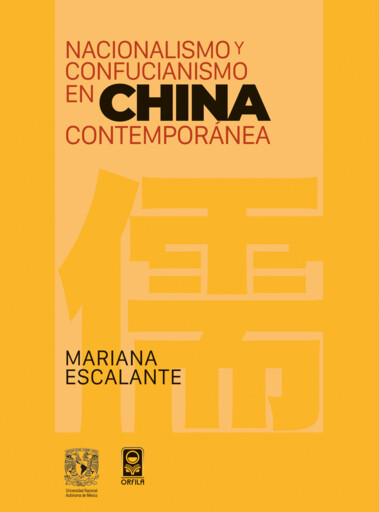
FILE PHOTO: Nacionalismo y Confucianismo en China contemporánea
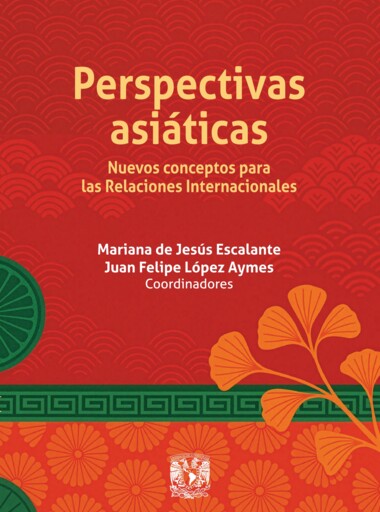
FILE PHOTO: Perspectivas asiáticas: Nuevos conceptos para las relaciones internacionales
Close economic ties do not automatically translate into cultural affinity. For Mariana Escalante, a professor at the Center for International Relations in the Faculty of Political and Social Sciences at the National Autonomous University of Mexico (UNAM) and founder of the Mexican Association of Sinology, a central concern throughout her research and teaching has been how China and Latin America can build on robust economic and trade relations to deepen mutual cultural understanding and help Latin American countries move from merely “knowing about China” to genuinely “understanding China.”
In a recent interview with CSST, Escalante shared her views on how China–Latin America academic cooperation can move beyond dependence on Western academic intermediaries, the importance of Confucian thought in bringing Latin America closer to and deepening its understanding of contemporary China, and the possibilities for advancing autonomous Latin American knowledge systems through mutual learning with China.
Returning to China’s intellectual and cultural logic
CSST: You have frequently discussed Confucian thought in your work. What perspectives can it offer Latin America in understanding contemporary China that Western approaches cannot provide?
Escalante: The study of Confucian philosophy is essential for understanding contemporary China because its principles remain deeply embedded in daily life, social organization, and even state practice. Although Confucianism is often not explicitly invoked, it is present in the conception of social harmony, the individual’s role within the community, the ethical foundations of social order, and the conduct of governance.
One of the most notable features of Confucian thought is its practical and interpretive orientation. It is not an abstract philosophy suspended above reality, but a mode of thinking that confronts real problems and responds to the urgent questions of its time. Many of these issues remain relevant today, such as social order, poverty, the relationship between ethics and power, and the need to build a civilized and stable society. Confucius and other Chinese thinkers did not propose distant utopias or ontological truths; rather, they reflected from and for the present, always seeking stability, harmony, and moral improvement.
This valuable intellectual legacy is still alive in contemporary Chinese society. It is reflected in everyday practices such as respect for elders, the importance of the extended family, the pursuit of harmony over confrontation, and an ethic of individual responsibility toward the community. It is also reflected in the idea of meritocracy. Without a deep understanding of this cultural logic, Latin American scholars can hardly grasp the weight carried by the word “harmony” in contemporary Chinese discourse.
Beyond Anglocentrism
CSST: You have observed that some Mexican scholars rely on secondary sources when studying China. Are there deeper structural factors behind this reliance? To what extent is Mexican academia influenced by Eurocentrism?
Escalante: Mexican academia, much like academia in many Latin American countries, remains deeply influenced by Eurocentrism across disciplines, especially in the social sciences. When it comes to China studies specifically, the bias is often more “Anglocentric” than “Eurocentric.” In many cases, English-language narratives are treated as the only legitimate entry point to knowledge. This is not because of their inherent merit, but because of the power structures, dominance, and accessibility they represent.
The issue is not that valuable work in English should be ignored—many outstanding scholars who write in English have first-hand knowledge of China and manage to move beyond Western prejudices or deterministic lenses. The problem is that in Latin America we too often replicate these dominant narratives uncritically, simply because they are the most accessible or because they seem closest to our own academic traditions and values. Yet it is worth noting that these same hegemonic Western perspectives also approach Latin America from biased, hierarchical positions of power. We should always maintain a high degree of critical self-awareness.
CSST: In response to “Anglocentrism,” what efforts has Latin American academia made to change this situation? What concrete steps can scholars take to bypass European and American academic intermediaries and engage directly with China?
Escalante: In recent years, Latin American academia has made important progress in the “decolonization of knowledge” and in challenging the monopoly of European and American viewpoints. My own scholarly writings have sought to counter these biases by presenting China’s perspective in Spanish, as in my 2024 book Nationalism and Confucianism in Contemporary China. In it, I aim to portray Chinese culture, political thought, and philosophy from within their own frameworks, not merely as filtered through Western interpretations. I also try to bring this perspective into the classroom, helping Mexican students see China on its own terms, in relation to its own political system, society, and role in the international order.
In terms of academic output, in March 2025 I co-edited, with Juan Felipe López Aymes, a researcher at UNAM’s Center for Multidisciplinary Research, the book Asian Perspectives: New Concepts for International Relations. It gathers key concepts from political science and sociology from China, the Korean Peninsula, and Japan, aiming to present Asian localized understandings of nationhood, globalization, Datong (universal harmony), development, and sovereignty. Most of my research shares a common wish: to write academic works in Spanish that show Asia’s real positions, so that Latin American readers can bypass English-language academic intermediaries and draw directly on Asian intellectual resources.
To break Anglocentrism, we need broader contact with Chinese primary sources, language learning, and a critical attitude toward all sources—Western, Chinese, or from other regions and cultures. As teachers and researchers, we have a responsibility to portray a more nuanced, complex, and “real” China—one that goes beyond stereotypes and acknowledges its own voice in global debates.
Toward more balanced global academic dialogue
CSST: You have mentioned “the decolonization of knowledge” several times, which raises deeper epistemological questions. To what extent do Latin American scholars across disciplines recognize the need to develop autonomous knowledge systems?
Escalante: For decades there has been a strong current of thought in Latin America calling for the development of our own knowledge systems and epistemologies—ones grounded in our historical, cultural, and political realities, rather than merely reproducing theoretical frameworks developed in Europe or the United States. From philosophy to sociology and cultural studies, scholars such as Peruvian sociologist Aníbal Quijano, Mexican-Argentine philosopher Enrique Dussel, and Mexican historian and philosopher Leopoldo Zea, among others, have contributed significantly to this debate.
In recent years, a parallel critique has extended to the level of knowledge production, especially in Latin American feminist thought. Scholars including Argentine anthropologist Rita Segato, professor emerita at the University of Brasília; Argentine philosopher María Lugones, professor at Binghamton University; Karina Ochoa, a sociologist at the Metropolitan Autonomous University (UAM) in Mexico; and Mónica Inés Cejas, a professor of politics and culture at UAM, have criticized the coloniality of knowledge and the subordination of the Global South, reflecting on cognitive inequalities sustained by Western power.
The push for a distinct Latin American epistemology is deeply connected to the region’s broader effort to redefine its role on the global stage. As Latin America strengthens ties with Asia, Africa, and other parts of the Global South, it has both the opportunity and the responsibility to bring its own narratives, values, and analytical frameworks into the conversation. Building this intellectual sovereignty is not only an academic exercise—it is also a political and cultural project, essential for positioning Latin America as a meaningful and autonomous actor in addressing today’s global challenges.
CSST: What position does Latin American epistemology currently occupy in global academia? To what extent are Latin American perspectives recognized in international academic discourse?
Escalante: Latin American epistemology has historically been at the margins of global academia, which remains dominated by European and American paradigms. Although the region has produced many influential theories, these contributions are often seen internationally as “regional” or “context-specific,” rather than as universally applicable frameworks. In International Relations, which was my major at university, this is very evident; it is as if Global South production or epistemology is not “global” enough. There are, however, fields where Latin American thought has gained significant recognition, particularly in postcolonial and decolonial studies, feminist theory, and development studies.
One of the structural barriers is language. Much of our scholarship is produced in Spanish, but the dominant language of global academic discourse is English. This creates a reliance on selective translation and often on academic “gatekeepers” in the Global North, who may reframe Latin American ideas in ways that dilute their original epistemological intent.
There is a slow but growing interest in building “South–South epistemologies” and strengthening direct intellectual dialogue among Latin America, Asia, and Africa. For example, Women from the South. Poetics of the Encounter with Asia and Africa, co-edited by Cejas and Alejandra Galindo Marines, a professor of social sciences at the University of Monterrey, Mexico, embodies this idea. The book, published in 2002, collects essays by seven Latin American women scholars, exploring what it means for us, as women, to conduct research from the South about the South. In this work, we began to propose methodologies and a genealogy of Southern studies on the South. It also includes my article, which discusses the significance of researcher subjectivity for knowledge production, especially the implications of being a woman researcher from the “South” studying China.
Despite these and other efforts, our voices still have limited representation in global academia—something that is also tied to geopolitical realities, in which Latin America does not occupy a position of predominant power.
Editor:Yu Hui
Copyright©2026 CSSN All Rights Reserved