


Reviving China’s ancient scripts
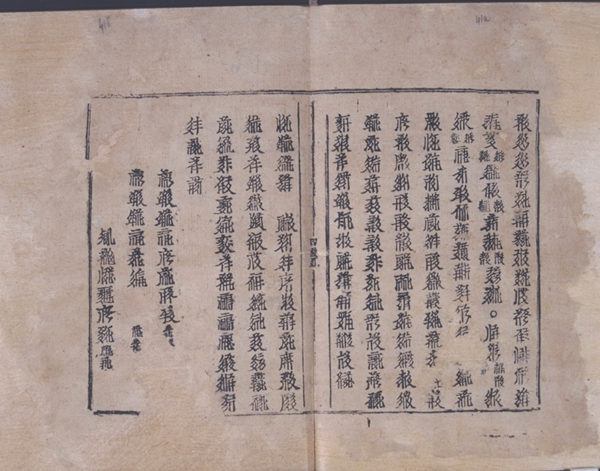
Sandai Xiangzhao Wenji—Collected Writings of the Mutual Illumination of the Three Generations Photo: PROVIDED TO CSST
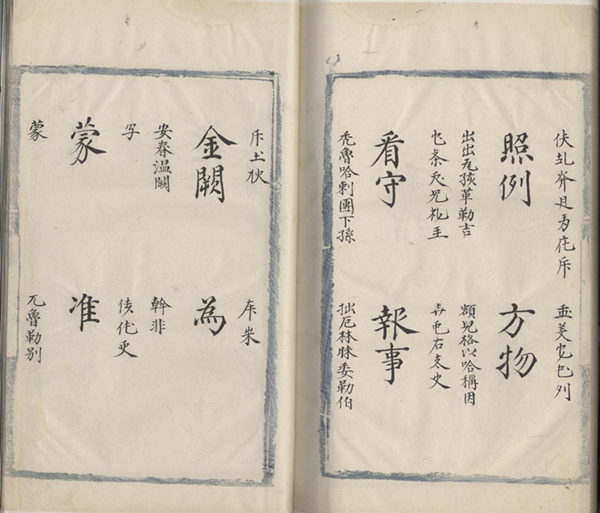
The Sino-Jurchen Vocabulary held in the National Library of China Photo: PROVIDED TO CSST
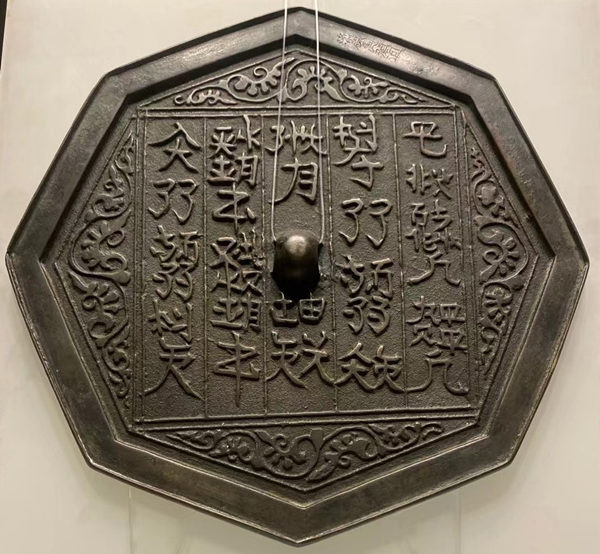
The reverse of the Liao Dynasty octagonal bronze mirror features five lines of small Khitan script, from the collection of the Jilin Provincial Museum Photo: PROVIDED TO CSST

Sun Bojun Photo: PROVIDED TO CSST
Unity in diversity is a thread woven through more than 5,000 years of Chinese civilization. In manuscript fragments unearthed at Khara-Khoto, inscriptions on stone and bronze from successive dynasties, and classical texts passed down by different ethnic groups, the ancient scripts of northern peoples—including Tangut, Khitan, and Jurchen—preserve a vivid record of how China’s ethnic groups interacted, exchanged ideas, and became more closely intertwined. These writings are among the most precious records of Chinese civilization. They help explain how the Chinese nation took shape and provide a foundation for cultural confidence.
For more than three decades, Sun Bojun, a research fellow from the Institute of Ethnology and Anthropology at the Chinese Academy of Social Sciences (CASS), has devoted herself to studying the ancient scripts of China’s ethnic groups. Her work has helped bring texts that lay dormant for a thousand years back to life, bringing into sharper focus the long history of exchange and integration among the peoples who wrote them. Recently elected a CASS Member, Sun spoke with CSST about her career in rare and endangered studies and how she connects basic research with national cultural strategies. She also discussed how that work can strengthen a sense of community for the Chinese nation and help build an independent knowledge system of Chinese philosophy and social sciences.
Unity in diversity in historical records
CSST: In modern times, large numbers of valuable documents from Dunhuang and Khara-Khoto were scattered overseas, a situation summed up in the saying, “the Western Xia was part of China, but Western Xia Studies has largely been pursued abroad.” What national responsibility do scholars of China’s ancient ethnic scripts bear in safeguarding China’s authority to interpret its own civilization and strengthening its voice in international scholarship?
Sun: At the beginning of the 20th century, large quantities of documents in ancient ethnic scripts unearthed at Khara-Khoto and Dunhuang were taken abroad by foreign explorers. The original materials remained in overseas institutions for many years, while early research was dominated by foreign Orientalists. The situation encapsulated in the phrase “the Western Xia was part of China, but Western Xia Studies has largely been pursued abroad” has long been a lingering regret for older generations of Chinese scholars.
Western Xia Studies in China got off to a relatively late start, but its scholarly tradition has been sustained and passed down through successive generations. Linguist, historian, and ethnologist Wang Jingru established a framework for systematic research on the Western Xia (1038-1227) in China and trained the first generation of Chinese scholars to carry the discipline forward. His three-volume treatise Western Xia Research was awarded one of the highest prize in international Sinology—Prix Stanislas Julien. Since the 1980s, scholars such as Shi Jinbo, Bai Bin, and Nie Hongyin have continued to deepen the field, giving rise to a distinctive CASS school of Western Xia Studies. In the 21st century, safeguarding China’s authority to interpret its own civilization and enhancing its voice in international academic discourse on the study of ancient ethnic scripts have become an unquestionable duty for our generation of scholars.
We have carried forward the traditional Chinese approach to textual criticism and the examination of historical documents, deciphering large quantities of previously unpublished materials excavated from Western Xia sites. We have applied and developed the “four-line parallel translation” method to organize these texts and build a foundational corpus database. Drawing on Sino-Tangut phonetic transcription and phonological methods, we have clarified the patterns of phonological correspondence between the Tangut language and ancient Chinese. Through years of practice, we have gradually established a research framework rooted in China’s own scholarly traditions, corrected shortcomings in some overseas research paradigms, and developed our own knowledge and discourse systems in Western Xia Studies, while also laying a solid foundation for the discipline’s digital transformation. A genuine voice in academic discourse can only be earned through the efforts of successive generations of scholars who decipher texts character by character and continually produce rigorous research.
Five distinctive features of Chinese civilization
CSST: Chinese civilization is distinguished by its continuity, innovativeness, unity, inclusiveness, and peacefulness. You have spent many years studying primary sources written in ancient ethnic scripts during the Western Xia, Liao (907-1125), and Jin (1115-1234) periods. Based on this textual evidence, how should we understand these five characteristics?
Sun: Documents in ancient ethnic scripts can complement and corroborate Chinese-language historical texts. This is also the principle behind the “dual-evidence method” advocated by renowned Chinese scholars Wang Guowei and Chen Yinke. Such documents fill gaps in the historical record of Chinese civilization and constitute a valuable part of the cultural heritage of the Chinese nation.
The documents unearthed at Khara-Khoto provide compelling evidence of the Western Xia’s strong identification with the values of Confucian moral education as practiced in the Central Plains. The Western Xia undertook large-scale translations of the Confucian classics, historical records, philosophical writings, and literary collections. Among surviving translations of Chinese classics into the scripts of ethnic minorities, those in Tangut rank among the most numerous. For example, the Western Xia translated the Analects, the Mencius, and the Classic of Filial Piety, drawing on commentaries produced by the New Learning School in the Northern Song (960-1126) period.
Emperor Renzong of the Western Xia vigorously established schools, championed the Imperial University, and honored Confucius with the title of Emperor Wenxuan. He governed the state and educated the people through the Confucian ideal of benevolence.
The Western Xia was not alone in this respect. Minority regimes such as the Liao and Jin also actively adopted institutions and cultural traditions from the Central Plains. Different ethnic groups created their own scripts on the basis of the Chinese writing system and honored the pioneers who devised those scripts, continuing the long-standing tradition of reverence for the written word.
When minority regimes adopted elements of the Chinese writing system, they were doing more than borrowing written symbols. They were also actively embracing the Confucian values and ideas of state governance embodied in Chinese characters, making this intellectual tradition an important foundation for governing their regimes and educating their societies. Documents in ancient ethnic scripts reflect the perspectives of the groups that produced them. They confirm the high regard in which these groups held China’s fine traditional culture and vividly demonstrate the continuity, unity, and inclusiveness of Chinese civilization. These unearthed documents provide direct evidence for explaining the five distinctive features of Chinese civilization.
Building independent knowledge system
CSST: China is stepping up efforts to build an independent knowledge system of Chinese philosophy and social sciences. What does this entail for Western Xia studies and research on the ancient scripts of China’s ethnic groups?
Sun: Building an independent knowledge system of Chinese philosophy and social sciences is a historic responsibility for our generation of scholars. Western Xia Studies can serve as a representative case.
Specifically, there are several important directions for this scholarship. First, by drawing on documents unearthed from Western Xia sites and archaeological remains along the Hexi Corridor, we can analyze the economic and cultural landscape of the Silk Road during the Song (960-1279) and Yuan (1271-1368) periods and reconstruct the history of interaction, exchange, and integration among different ethnic groups. Second, it is necessary to advance the comprehensive digitization of Western Xia documents and develop a systematic knowledge genealogy. Third, we should undertake comparative textual studies of Tangut and Tibetan documents to clarify the lines of transmission of Tibetan Buddhism during the Western Xia and Yuan periods. This would also enable us to examine the influence of the Western Xia imperial preceptor system on the political institutions of the Yuan dynasty, providing a scholarly foundation for research on the Sinicization of Tibetan Buddhism. Fourth, we should train a new generation of interdisciplinary specialists with expertise in both history and literature and a command of ancient Chinese and Tangut. Fifth, cross-referencing of Tangut and Chinese texts should be enhanced to fully reveal the academic value of Western Xia documents. Sixth, comparative studies of Tangut and modern Qiang languages should be conducted to advance historical linguistics. Seventh, there is a need to promote collaborative research across the disciplines of philology, phonology, and history, ultimately helping to develop an account of Chinese history and culture that reflects the contributions of all its ethnic groups.
A journey of perseverance
CSST: Collating and deciphering documents from Khara-Khoto means scrutinizing them character by character and often spending years working with damaged manuscripts. What difficulties have you encountered in your research?
Sun: The Tangut script is no longer in use, and the Tangut language has no living community of native speakers. This presents a major obstacle to research. Many surviving Tangut dictionaries are themselves written in Tangut, making them extremely difficult to understand. We have relied primarily on the Pearl in the Palm, a Tangut-Chinese glossary, and have advanced our decipherment work by comparing Tangut texts with Chinese- and Tibetan-language sources. In many cases, we have had to feel our way forward step by step. When I first entered this field and was confronted with manuscripts filled with unfamiliar characters, I, too, was daunted by the challenge.
The greater difficulties, however, arise from the nature of the documents themselves. The materials unearthed from Western Xia sites are highly diverse, including secular documents, Buddhist scriptures, legal texts, literary works, and materials on phonology. Among them, translated documents derive primarily from two major writing systems: Chinese and Tibetan. Many manuscripts are severely damaged, with characters faded or illegible. The titles of numerous texts cannot be identified, and the original source texts of some documents have been lost, leaving very little material for reference. Each new document to decipher may require additional knowledge from related disciplines.
Although the processes of textual collation and decipherment can be tedious, they also cultivate patience and strengthen the resilience needed to overcome difficult scholarly challenges. Engaging in rare and endangered studies demands a great deal of perseverance.
Editor:Yu Hui
Copyright©2026 CSSN All Rights Reserved